Wells We Did Not Dig
by Amy Hartmann
September 25, 2013
One of my sons turned 18 this month. I think about this milestone and my mind goes back 10 years ago, to a small 8 year old boy playing with legos on the floor in his room as I read nightly devotions to all of my kids. It was the first of October 2003 and I was very sad. At that time our family was expecting many good things to happen. Earlier in the year I received correspondence from a publishing house interested in publishing some of my novels. I had such great hope through out 2003 that it was time for the books to be in the marketplace.
For several years we had been considering a move to get away from the intercostal waterway so near our home. We had already gone through several bad hurricane seasons and forced evacuations. Pictures from the hardest hit areas were a constant reminder we needed to get to higher ground. I was content to be near the beach but I did not want to see the damage of flood waters should a big storm come in at high tide. I knew in my heart we needed to move.
One area of Jacksonville really caught my attention because it was the highest land on the north side of Jacksonville. I knew little of the history of the area but I felt a special desire to settle there. One house in particular had been on the market for almost 3 years. I diligently followed its progress along with several other possible homes. I earnestly prayed daily over such a big change. I even printed out real estate flyers of possible choices for our move.
A common theme I’d been following in the scriptures was the importance of inheritance – a word used more than 238 times throughout the Old and New Testaments. Land ownership was a great dream to the freed Hebrew slaves leaving Egypt under the leadership of Moses. Property ownership was a strategic plan for the settlement of the promised lands. This same concept held true for first settlers of America – the American dream which captured the hearts of millions struggling to come to our nation.
I wanted our family home to be a place that our children would want to own long after my husband and I were gone. I wanted property that would be a suitable inheritance through the future generations. No one in our family knew of my real estate brochures or about all of the scriptures I’d written on the back of one specific flyer. This was my prayer secret and it was folded and hidden in the pages of my Bible.
At the end of September, 2003, I drove over to the area I now had named ‘the house on the hill’. This time, my drive was abruptly disturbed when I realized the house had sold. I was crushed. My hopes for the move were over and I was in a state of grief. As I sat with my children on the evening of October 1st, my tears began to fall as I read from Psalm 145…”The Lord is faithful to all His promises and loving toward all He has made…He opens His hand and satisfies the desires of every living thing.”[1]
I guess something in my voice caught the attention of my young son. He looked up from his toys and our eyes met. He stood up, came over to my chair and he took the Bible from my hands. He climbed up in my lap and he began to turn the pages till he found the Old Testament book of Deuteronomy. He leafed through the pages slowly. Suddenly he stopped. Then he began to read aloud the entire 6th chapter. As he read, he began to weep. Once he was finished reading, his right hand began to feel up and down the page. This went on for a minute or two. By this time, he was also trembling and I could feel him shake as he sat in my lap. Then his hand stopped and he placed his fingers over two specific verses. He lifted the Bible in his other hand and said, “Mom, God told me that these verses were for you: God is going to give us houses we did not build filled with good things we did not provide and olive groves and VINE yards we did not plant.”
I looked down at the verses his fingers were marking and they were the very ones I had written down on the back of the house on the hill real estate flyer:
“When the Lord your God brings you into the land He swore to your fathers, Abraham, Isaac and Jacob, to give you – a land with large, flourishing cities you did not build, houses filled with all kinds of good things you did not provide, wells you did not dig, and vineyards and olive groves you did not plant – then, when you eat and are satisfied, be careful that you do not forget the Lord, who brought you out of Egypt, out of the land of slavery.”[2]
My son was only 8 years old. It was amazing that he was capable of finding the book of Deuteronomy on his own, let alone flip through the pages and then read aloud the entire 6th chapter. As I watched his fingers feel of the page – much like a blind person would read a Braille script – and when he stopped and touched the verses I had been secretly reading out as prayers for so many months – I was completely astonished! My other kids recognized this moment and we all stopped and prayed, thanking Holy Spirit for speaking to us so personally and specifically.
Several days later, my son was in the shower when Holy Spirit spoke to him again, promising to heal our eyesight. At that time, I was the only person wearing contacts and glasses. My vision began to deteriorate when I was in 3rd grade and by 4th grade I was in need of strong glasses. As of this writing, all of us wear corrective lens or glasses.
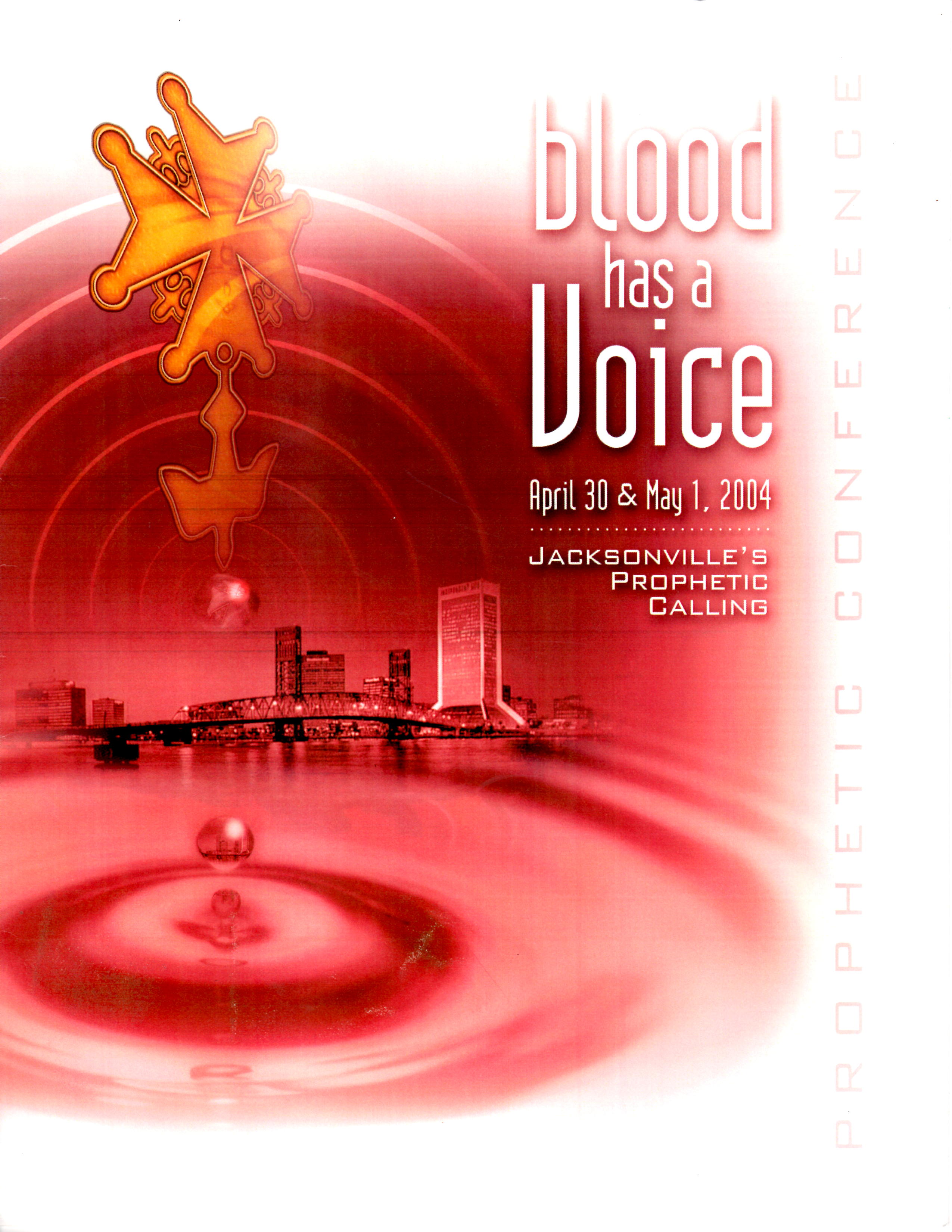
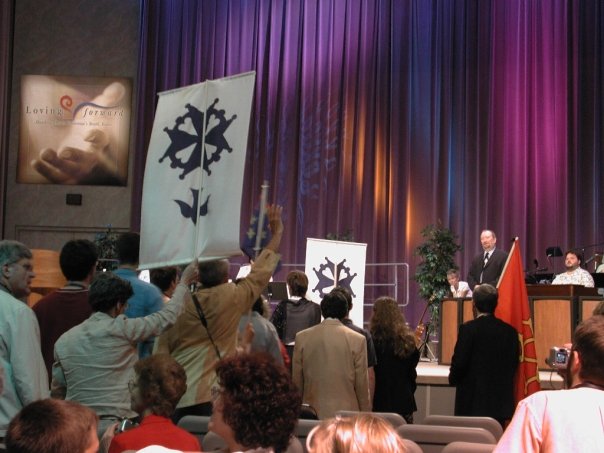
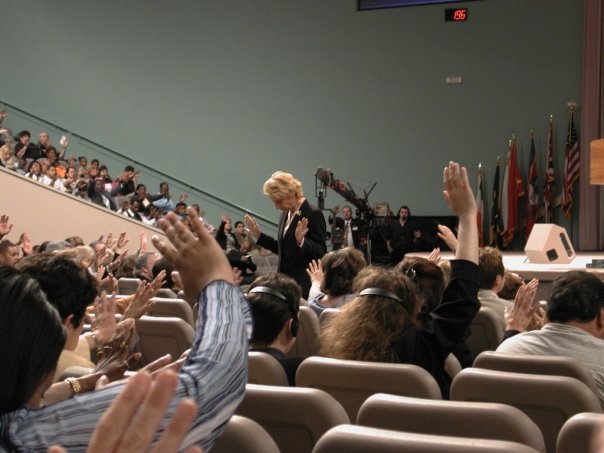
2003 ended with no breakthrough for my books. 2004 raced by. April 30, 2004 our church held a conference celebrating the 440th anniversary of the settlement of St. John’s Bluff by the French Huguenots. The Conference was entitled, “Blood Has A Voice”.
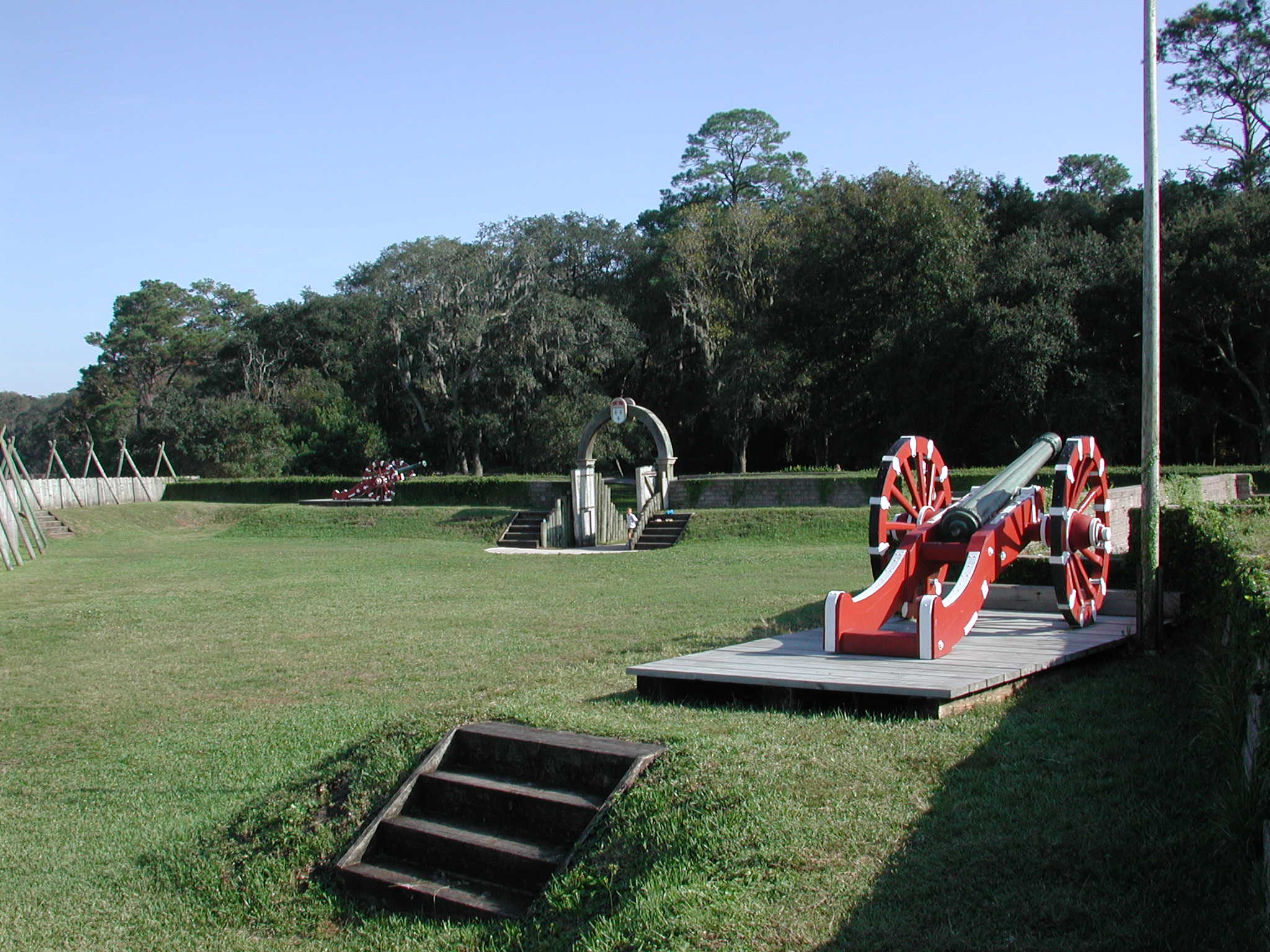
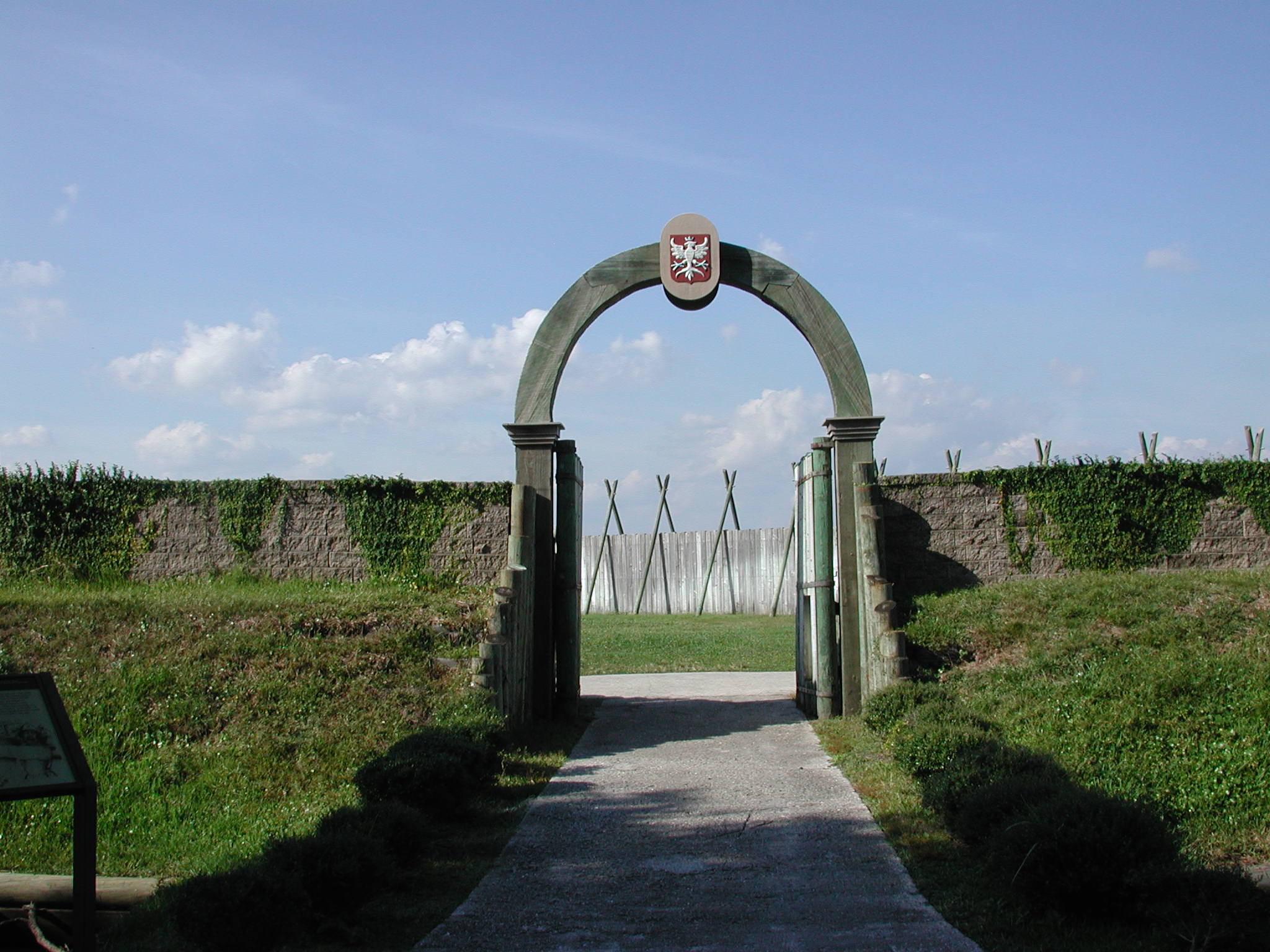
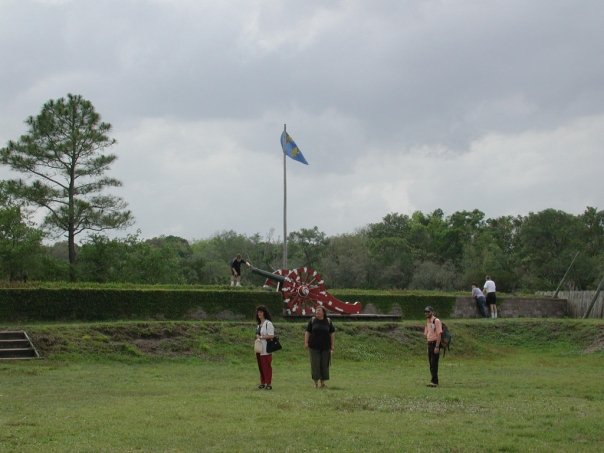
 Oddly enough, the house on the hill was a few hundred yards from Fort Caroline and only a quarter of a mile down from the Ribault Monument which commemorated the first landing of the Huguenots in 1562 and in May of 1564. At that time, I knew nothing about the Huguenot settlement on the banks of the St. John’s River.
A tour of Fort Caroline National Park helped me see the significance of the French settlement. The Huguenots of 1564 represented a growing movement of religious refugees seeking a land where they could worship God free of government control. These reformers grasped the searing words of the ‘protest’ German priest Martin Luther in 1517 and his 95 Thesis nailed to the cathedral door in Wittenberg, Germany: The just shall live by faith.

It was this special revelation of God’s grace over man’s works that caused Martin Luther to challenge the ecclesia of his day. Martin Luther’s translations of the Latin Biblical texts into the vernacular of the people fueled this great Protestant Reformation. Salvation was not achieved through good works and deeds, nor was it purchased through indulgences being peddled by the church representatives from Rome. Luther’s translation of the book of Romans revealed this historic truth that salvation was only received by faith in the death and resurrection of Jesus as the Christ.[3]
As the conference commenced, I had the opportunity to meet most of the French visitors who had come so far to celebrate this historic anniversary. Over and over again, in their heavily accented broken English, the Huguenot descendents would ask me the same question, “Are you Huguenot too?”
My family was from East Tennessee and my husband’s family from South Carolina. It seemed possible that his family might have some distant ties with these early settlers but I was convinced that no one from the hills of East Tennessee could possibly have such historic roots.
The conference also featured a key note speaker who was a direct descendant of Pedro Mendez, the Spanish military leader who hunted down and massacred the Fort Caroline French inhabitants during the fall of 1564.
“Now Cain said to his brother Abel, “Let’s go out to the field”. And while they were in the field, Cain attacked his brother Abel and killed him. Then the Lord said to Cain, “Where is your brother Abel?”
“I don’t know,” he replied. “Am I my brother’s keeper?”
The Lord said, “What have you done? Listen! Your brother’s blood cries out to Me from the ground. Now you are under a curse and driven from the ground which opened its mouth to receive your brother’s blood from your hand.”[4]
Anna Mendez Ferrell led several public ceremonies of identificational repentance, calling on the generations now present at the conference to forgive this grievous act of murder and appease the righteous, martyred blood spilled on the banks of the St. John’s River and the coast of what is now Jacksonville and St. Augustine.
Several weeks after the conference, I contacted my cousin, Dr. Regina Tullock. Regina’s family passion had always been genealogy. Regina was a professor at a community college near Knoxville, Tennessee. Her mother, Helen Lee Tullock (my father’s eldest sister) had made great in roads in seeking out our Lee family history. Many times dear Aunt Helen had shared her adventurous tales of cemetery crawls and courthouse record searches at our family reunions. Up until that point, I had never paid respectful attention to her work. Suddenly, my family history became a heartfelt passion as I shared the conference highlights with Regina and asked her the all important, burning question: Were we of Huguenot descent?
“We are Bodines,” Regina answered, and our family line is on the official Huguenot register. Then she began to explain the family ties and all of her findings. After our call, I embarked on a year long task of searching out and building my own family tree on a well known genealogy website. By late 2005 I had significant proof of Huguenot roots on both my mother and my father’s family lines.

It took all of that work to help me understand my original desires to live at the house on the hill in the first place. I know that at some point in our future, our vision will be restored and we will see the vine yards my son prophesied. Something deep in my bloodline was calling me back to the lands that represented the Gospel of Grace and the high price those early settlers were willing to pay to live by faith. The land over by Fort Caroline and the Ribault Monument was and still is very special.
“I said to the Lord, “You are my Lord; apart from You I have no good thing…Lord, You have assigned me my portion and my cup; You have made my lot secure. The boundary lines have fallen for me in pleasant places; surely I have a delightful inheritance.”[5]
[1] Psalm 145:13-16; paraphrased; “The Comparative Study Bible – The New International Version;” copyright 1999; Zondervan Publishing; Grand Rapids, Michigan; page 1585.
[2] Deuteronomy 6:10-12; ibid, page 477.
[3] Romans 1:17, ibid, page 2862.
[4] Genesis 4:8-11; ibid, page 11.
[5] Psalm 16:2, 5-6; ibid, page 1383.
 Not A Matter of Talk